
Kings of Thrace
Lysimachos (305–281 BC)
AR Tetradrachm – Chalkedon Mint (?)
In the Name of Alexander the Great
A magnificent and historically important silver tetradrachm struck under Lysimachus, one of the most powerful successors of Alexander the Great following the fragmentation of Alexander’s empire.
Issued after 281 BC and attributed to the rare Chalkedon mint, this impressive tetradrachm belongs to one of the most celebrated coin series of the Hellenistic world. The iconic portrait of the deified Alexander combined with the majestic Athena reverse made Lysimachos coinage among the most prestigious silver issues of antiquity.
With its large module, elegant toning, and expressive portraiture, this piece represents the artistic peak of Hellenistic numismatic engraving.
🪙 Coin Details
Kingdom: Thrace
Ruler: Lysimachos
Date: After 281 BC
Mint: Chalkedon (?)
Denomination: Tetradrachm
Material: Silver (AR)
Weight: 16.02 g
Diameter: 31 mm
Condition: About Very Fine / Very Fine
Rarity: Rare Mint
Obverse
Diademed head of the deified Alexander the Great facing right, adorned with the horn of Ammon.
This extraordinary portrait presents Alexander not merely as a conqueror, but as a divine ruler associated with Zeus-Ammon, blending Greek and Egyptian religious symbolism.
The portrait style is among the most admired in all ancient coinage, characterized by deeply engraved features, flowing hair, and an intense, heroic expression.
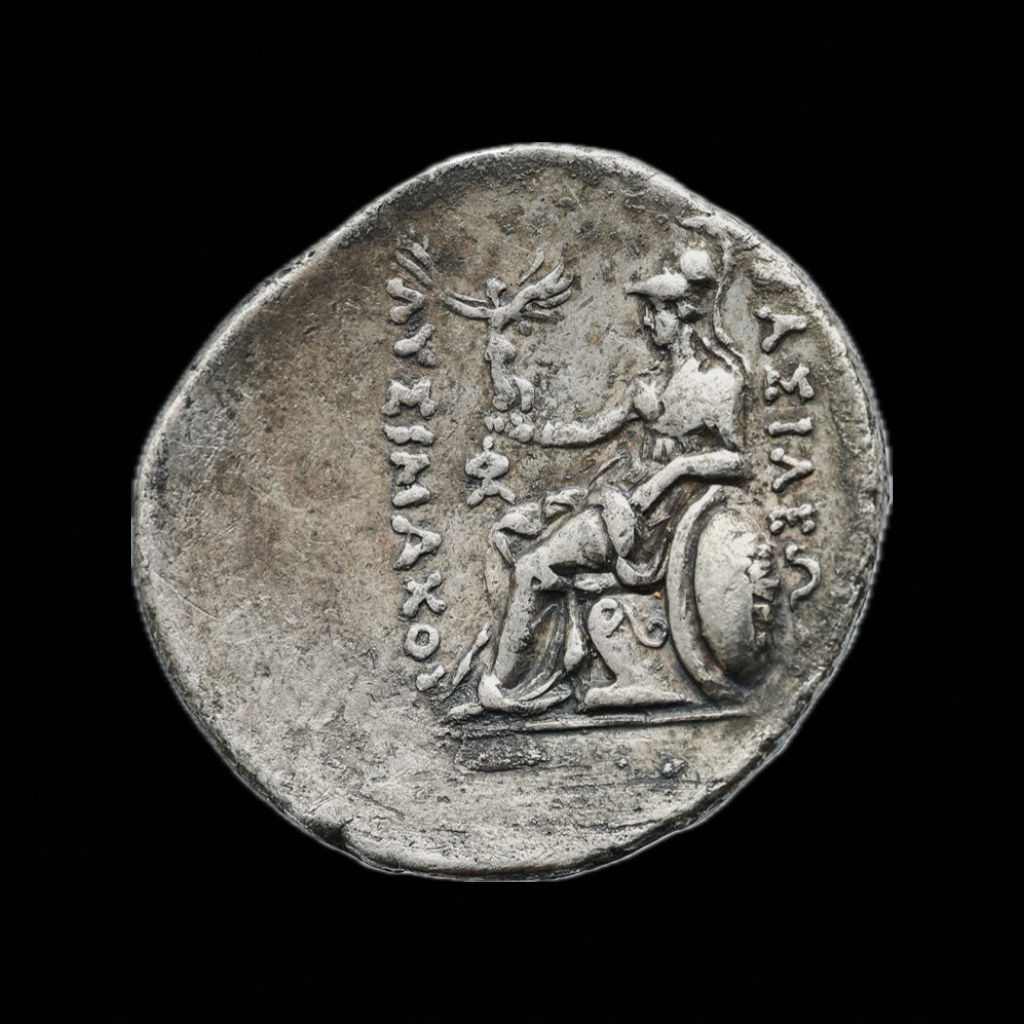
Reverse
ΒΑΣΙΛΕΩΣ ΛΥΣΙΜΑΧΟΥ
Athena Nikephoros seated left upon throne, holding Nike crowning the king’s name, with shield decorated by gorgoneion and spear behind.
Athena symbolizes wisdom, protection, and military authority, while Nike represents victory and divine favor bestowed upon the ruler.
The composition is one of the masterpieces of Hellenistic coin design, balancing power, elegance, and royal propaganda.
🏛 Historical Importance
After the death of Alexander the Great in 323 BC, his generals — the Diadochi — fought for control of the empire.
Lysimachos eventually established himself as ruler of:
Thrace,
western Asia Minor,
and parts of Macedon.
To legitimize his rule, he adopted the image of Alexander as a divine dynastic symbol, issuing silver coinage that circulated widely throughout the eastern Mediterranean and beyond.
These tetradrachms became some of the most influential and recognizable coins of the Hellenistic age.
⭐ Why This Coin Matters
Rare Chalkedon mint attribution
Iconic portrait of deified Alexander the Great
Superb Athena Nikephoros reverse
Large and impressive silver module
Historic Diadochi coinage
One of the most desirable Hellenistic tetradrachm types
A remarkable silver masterpiece from the age that followed Alexander the Great and shaped the Hellenistic world.