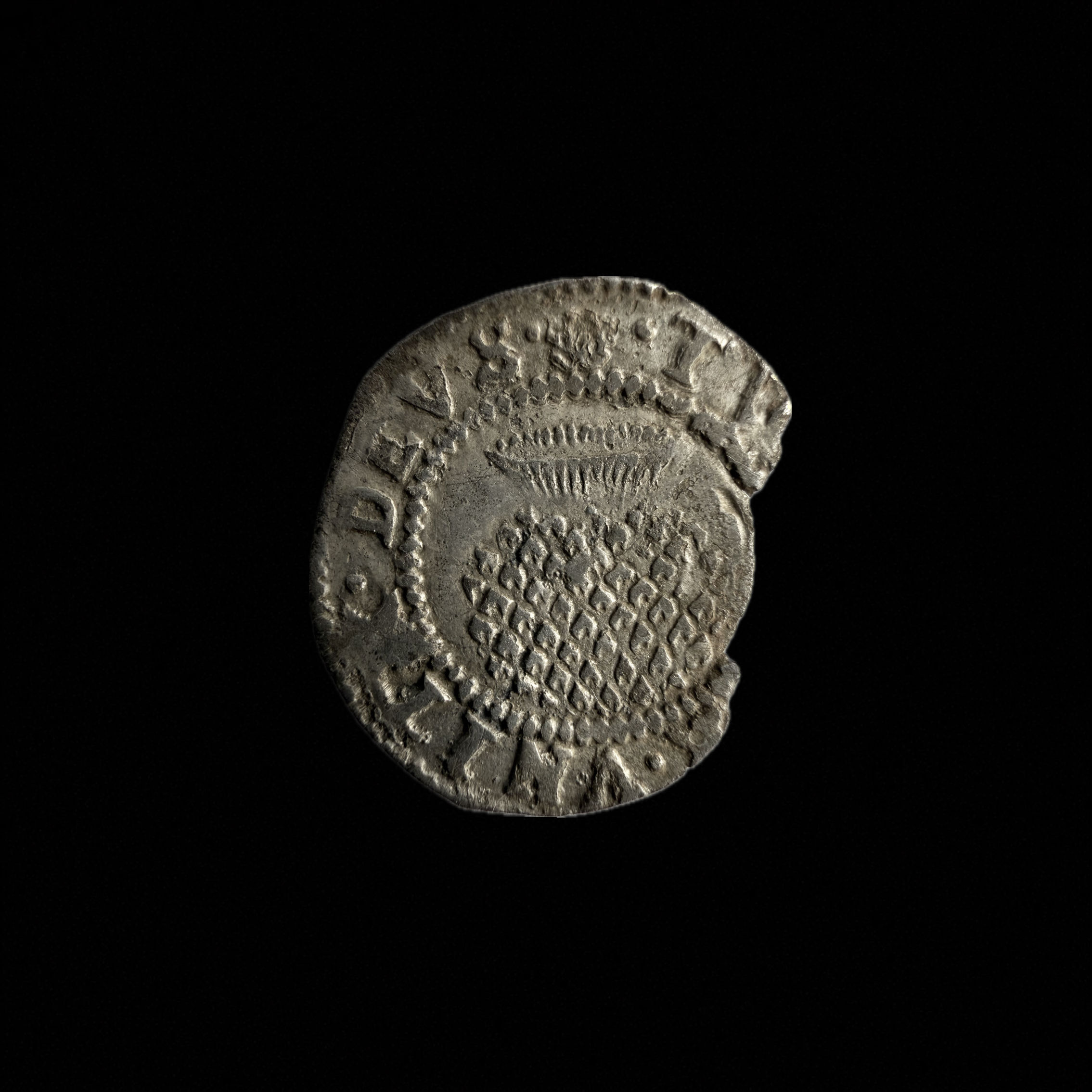

England – James I (1603–1625) – AR Silver Penny – Rose & Thistle – Stuart Dynasty – SCBC 2661
Country: England
Dynasty: Stuart
Ruler: James I (1603–1625 AD)
Denomination: Penny
Mint: Tower Mint, London
Metal: Silver (AR)
Weight: 0.33 g
Diameter: 13 mm
Condition: Clipped, otherwise approximately Very Fine (VF)
Reference: SCBC 2661 (as identified on the accompanying collector’s ticket)
Obverse: Tudor rose surrounded by a beaded inner circle and a partially preserved Latin inscription. The rose retains well-defined petals and central detail.
Reverse: Crowned Scottish thistle with a distinctive lattice-patterned flower head, enclosed within a beaded circle. Portions of the surrounding legend remain visible.
Historical Background:
James I of England, also known as James VI of Scotland, became King of England in 1603 following the death of Elizabeth I.
His accession united the English and Scottish crowns under a single monarch, an event known as the Union of the Crowns.
The rose and thistle depicted on this silver penny symbolize England and Scotland respectively, reflecting the political and dynastic union established under the Stuart monarchy.
Small silver pennies of this period were used in everyday transactions and represent an interesting chapter in early seventeenth-century British monetary history.
Condition and Collector’s Notes:
An attractive small hammered silver penny of James I, featuring the symbolic Tudor rose and crowned Scottish thistle.
Both central designs remain clearly recognizable, with particularly appealing surviving detail in the rose petals and the thistle’s textured surface.
The coin has been significantly clipped along one side, resulting in an irregular flan and the partial loss of the peripheral inscriptions.
Natural grey-silver toning and moderate circulation wear are present.
A collectible example of early Stuart silver coinage, particularly appealing to collectors of British hammered coins and the history of the Union of the Crowns.
The photographs show the actual coin offered for sale and form an integral part of the description.